
Ralph Middleton Munroe
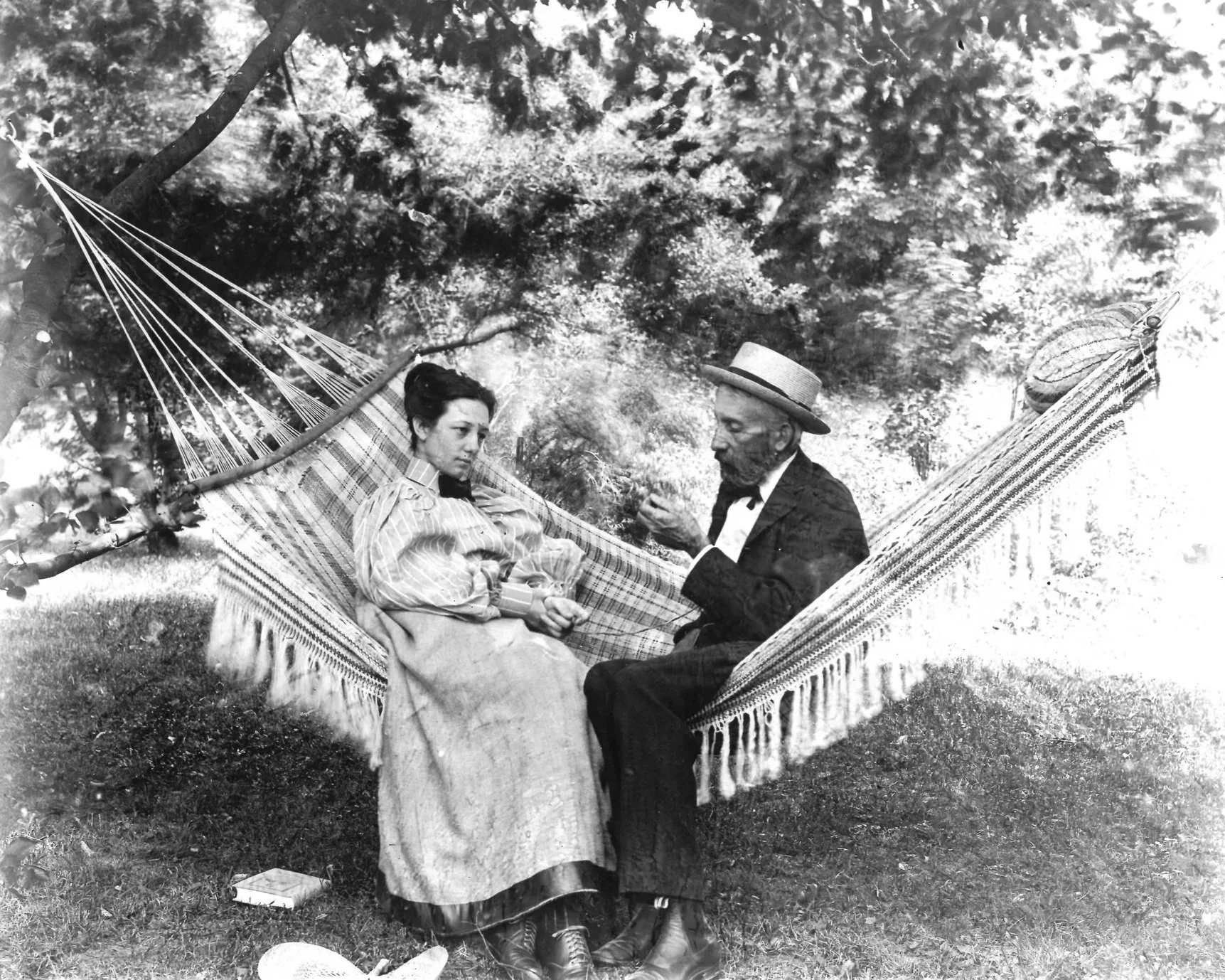
Ralph Middleton Munroe
Ralph Middleton Munroe was born on April 3rd, 1851, in New York City, New York, to Thomas and Ellen Munroe. This family has a storied history in the greater New England area. Ralph Munroe’s grandfather, William Munroe, was a member of the transcendentalist movement in Concord, Massachusetts. These early transcendentalist ideals influenced Ralph Munroe heavily as an adult.
Ralph would marry Evaline “Eva” Amelia Hewitt in Staten Island. Eva was diagnosed with tuberculosis in 1881 just after she gave birth to their first daughter, Edith. Ralph and Eva would leave their young daughter and head south to Fort Dallas (modern-day downtown Miami) in the hopes that the change in climate would cure Eva’s illness. Unfortunately, Eva passed away here. The tragedy continued when he arrived back to Staten Island and found out that his infant daughter had also passed away. These tragedies pushed Ralph Munroe on a serendipitous trajectory.
Overcome with grief, Ralph Munroe would spend his winters in Coconut Grove and his summers in New York. He would eventually purchase this property in 1886 for $400 cash and a boat, the Kingfish. Construction would first start on the boathouse. Then by 1891, the Barnacle House had been built. Construction on the carriage house would start in 1927. This unique structure is now our park visitor’s center.
Ralph Munroe married his second wife, Jessie Wirth, in 1895. This new family grew exponentially with the addition of their children, Martha “Patty” and Wirth. Jessie’s sister, Aunt Sarah Josephine “Dodie,” moving in shortly after. Aunt Dodie would take the children into the great outdoors to learn from what they could see, feel, and experience.
As a young man, Wirth would marry Mary Kimball Poore. They would move into a cottage on the property where they would have two boys: William “Bill” and Charles “Charlie.” Wirth would eventually move his young family into the Barnacle House, where Bill and Charlie would grow up. With the weight of escalating property taxes and increasing maintenance on the aging property, Wirth Munroe’s passing felt like the right time to part ways with the home. Thanks to Arva Moore Parks, the family sold the house to the State of Florida, and The Barnacle Historic State Park would open in 1973.
Ralph Middleton Munroe
Ralph Middleton Munroe nació el 3 de abril de 1851, en la ciudad de Nueva York. Sus padres eran Thomas y Ellen Munroe. La familia tenia una larga historia en la region de Nueva Inglaterra. El abuelo de Ralph Munroe, William Munroe, era un miembro del movimiento trascendentalista de Concord, Massachusetts. Los ideales del trascendentalismo influyeron profundamente en Ralph durante su vida adulta.
Ralph se caso con Evaline “Eva” Amelia Hewitt en Staten Island. Eva fue diagnosticada con tuberculosis en 1881 justo después de dar a luz a su primera hija, Edith. Ralph y Eva dejaron a su pequeña hija y vinieron a Fort Dallas (lo que hoy es el centro de Miami) con las esperanzas de que el cambio de clima curaría la enfermedad de Eva. Desafortunadamente, Eva falleció durante su estancia en Fort Dallas. La tragedia continuó cuando llegó a Staten Island y se enteró que su pequeña bebe también había muerto. Estas tragedias impulsaron a Ralph Munroe en un camino inesperado.
Abrumado de tristeza, Ralph Munroe comenzó a pasar los inviernos en Coconut Grove y los veranos en Nueva York. Con el tiempo compró esta propiedad en 1886 por $400 dólares y un velero, el Kingfish. Lo primero en construirse fue la casa de botes. Y en 1891, la casa principal, El Barnacle, se construyó. La construcción de la cochera comenzó en 1927. Esta estructura única se usa ahora como el centro de visitantes del parque.
Ralph Munroe se casó con su segunda esposa, Jessie Wirth, en 1895. La Familia crecio con el nacimiento de sus hijos, Martha “Patty” y Wirth. La hermana de Jessie, la tía Sarah Josephine “Dodie,” se mudo con la familia poco después de que nacieran los niños. La tía Dodie llevaba a los niños a explorar los montes para aprender de lo que veían, sentían y de las experiencias que tenían allí.
De joven, Wirth se caso con Mary Kimball Poore. Ellos se mudaron a la cabaña que estaba en la propiedad, donde tuvieron dos hijos: William “Bill” y Charles “Charlie.” Con el tiempo Wirth se mudo con su familia a la casa principal, el Barnacle, donde Bill y Charlie crecieron. Con el peso de los impuestos de propiedad escalando, y el aumento de los costos de mantener una propiedad antigua, el fallecimiento de Wirth Munroe fue el momento adecuado para que la familia se desprendiera de la propiedad. Gracias a Arva Moore Parks, la familia vendió la casa al estado de la Florida, y el Barnacle Historic State Park abrió al público en 1973.
Ralph Middleton Munroe
Ralph Middleton Munroe est né le 3 avril 1851 à New York, dans l’État de New York, de Thomas et Ellen Munroe. Cette famille est depuis longtemps présente dans la grande région de la Nouvelle-Angleterre. Le grand-père de Ralph Munroe, William Munroe, était membre du mouvement transcendantaliste à Concord, dans le Massachusetts. Ces idéaux transcendantalistes ont fortement influencé Ralph Munroe à l’âge adulte.
Ralph épousa Evaline « Eva » Amelia Hewitt à Staten Island. Eva fut atteinte de tuberculose en 1881, juste après avoir donné naissance à leur première fille, Edith. Ralph et Eva laissèrent leur jeune enfant et se dirigèrent vers le sud, à Fort Dallas (l’actuel centre-ville de Miami), dans l’espoir que le changement de climat guérirait la maladie d’Eva. Malheureusement, Eva y décéda. La tragédie continua lorsqu’il retourna à Staten Island et apprit que sa fille était également décédée. Ces événements tragiques orientèrent la vie de Ralph Munroe vers une trajectoire inattendue.
Accablé par le chagrin, Ralph Munroe passa ses hivers à Coconut Grove et ses étés à New York. Il finit par acheter cette propriété en 1886 pour 400 $ en espèces et un bateau, le Kingfish. La construction débuta d’abord par le hangar à bateaux. Puis, en 1891, la maison principale fut achevée. La construction de la remise à calèches commença en 1927. Cette structure unique est aujourd’hui le centre d’accueil des visiteurs du parc.
En 1895, Ralph Munroe épousa en secondes noces, Jessie Wirth. Sa nouvelle famille s’agrandit considérablement avec la naissance de leurs enfants, Martha « Patty » et Wirth. La sœur de Jessie, Sarah Josephine « Dodie », vint s’installer peu après. Tante Dodie emmenait les enfants dans la nature pour leur apprendre à partir de ce qu’ils pouvaient voir, toucher et expérimenter.
Jeune homme, Wirth épousa Mary Kimball Poore. Ils s’installèrent dans un cottage sur la propriété, où ils eurent deux fils : William « Bill » et Charles « Charlie ». Wirth installa ensuite sa jeune famille dans la grande maison, The Barnacle House, où Bill et Charlie grandirent. Face à l’augmentation des taxes foncières et aux coûts d’entretien croissants de la propriété vieillissante, la mort de Wirth Munroe sembla être le moment opportun pour s’en séparer. Grâce à Arva Moore Parks, la famille vendit la propriété à l’État de Floride, et le Barnacle Historic State Park ouvrit ses portes en 1973.