
Three Sisters Cottage
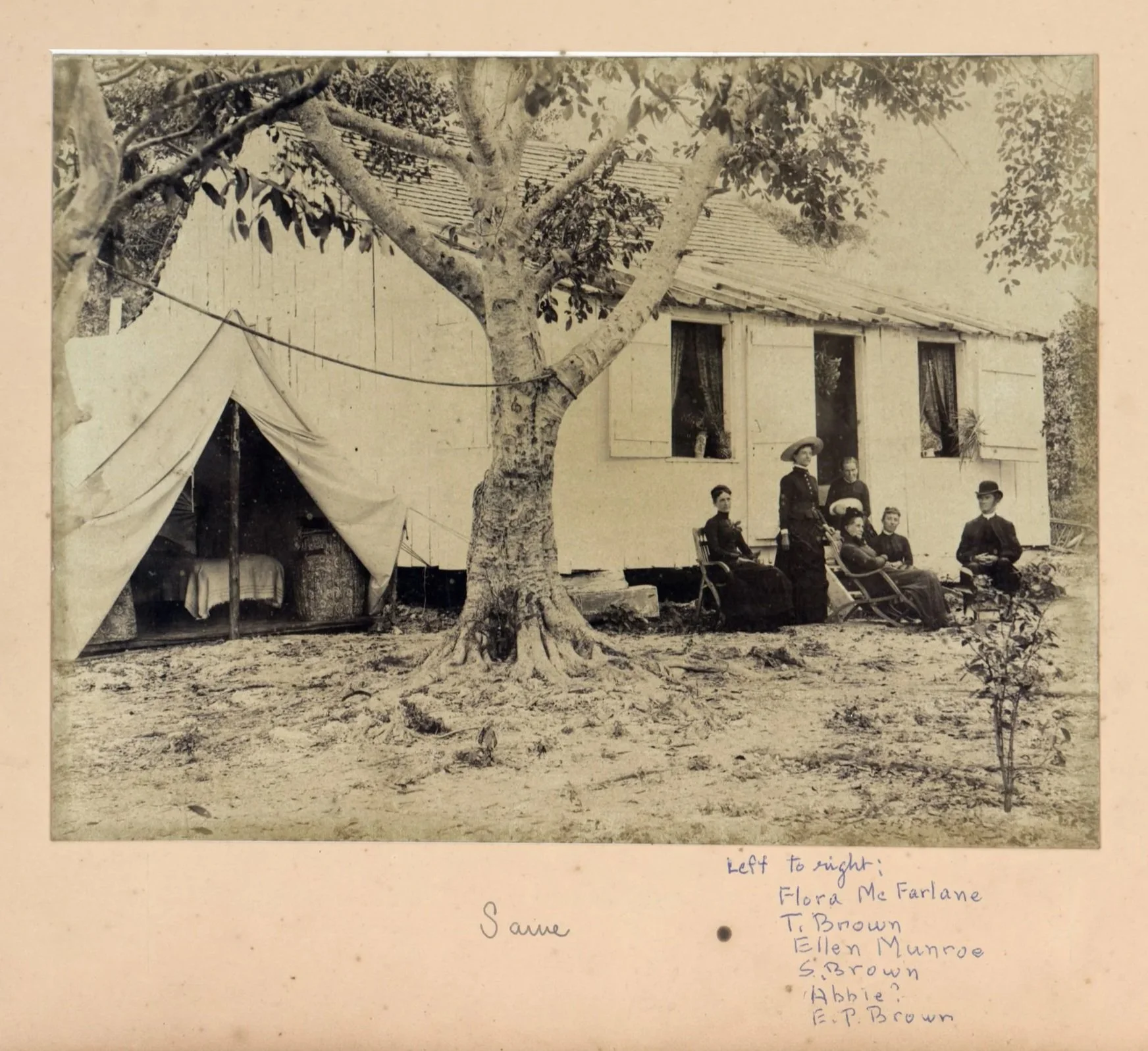
The Three Sisters Cottage
In 1870, there was a small group of permanent settlers living at Fort Dallas (modern day downtown Miami). Wealth in 1870s Miami didn’t come from money – it came from ship salvaging. Salvaging shipwrecks was such a lucrative business that it bordered on piracy. This was the moral line that the people of Fort Dallas faced on the infamous day the Three Sisters wrecked on October 21, 1870. A large ship struck a sandbar near Virginia Key. Dr. J. V. Harris had first spotted this wreck, and with two neighbors, Harrison Drew and Luke Nicholson, departed to see what they could find. Not wanting to leave such a treasure behind and to protect their claim, Harris stayed on board while Drew and Nicholson returned to shore to gather supplies. Much to all three men’s horror, a storm had rolled in, blocking Harris’s rescue from the abandoned ship. Four days later, the storm had subsided. Against all odds, Harris survived the storm and remained undeterred to claim his treasure. The milled lumber on board was the greatest prize of all. The salvaging of the Three Sisters was a broad, community effort.
It’s possible the salvagers believed their isolation would allow them to get away with the wrongdoing. The farce ended in December when Assistant US Marshal William Allen arrived with a court order. The courts ordered that the lumber be returned to the courthouse, and the parties involved needed to prove why they should not be held liable for restitution. In his search, Allen found 95,000 feet of lumber out of an alleged 125,000 feet. All but one man were charged with fraud and misconduct. It is said that only three men were incarcerated, including William Wagner. Wagner said that “two months of grits, black strap called syrup and dirty water called coffee” was enough for him and that he wouldn’t touch another wreck again (Moore Parks The Wreck of The Three Sisters).
However, there was a house made from the shipwrecked white pine that survived in secret. Ralph Munroe describes its journey to its final resting place here at The Barnacle.
“It seemed to having a roving disposition, for it was taken apart and moved to Bamboo Key and several other locations before settling in the rear of my house, where its timbers are still good.” (R.M. Munroe, The Commodores Story)
Over time, it fell into disrepair until its final demise sometime after Ralph’s passing in 1933. This structure in front of you is an homage to the persistence of these early settlers.
La Cabaña de las tres hermanas
En 1870, había un pequeño grupo de colonos viviendo en Fort Dallas, lo que hoy es el centro de Miami. En aquellos años, la riqueza en Miami no era generacional, sino que se obtenía mediante la recuperación de pecios. Esta actividad era tan lucrativa que podía confundirse con la piratería. Esa fue la situación a la que se enfrentó el pueblo de Fort Dallas el 21 de octubre de 1870, cuando el barco Three Sisters (Las Tres Hermanas) encalló. El gran velero quedó varado en un banco de arena cerca de Cayo Virginia. El doctor J. V. Harris fue el primero en descubrir el naufragio y, junto con dos vecinos, Harrison Drew y Luke Nicholson, salió a ver qué podían rescatar. Harris permaneció a bordo para custodiar el hallazgo, mientras Drew y Nicholson regresaron a tierra en busca de suministros. Para horror de todos, una tormenta impidió el rescate de Harris. Cuatro días después, cuando la tormenta finalmente amainó, Harris había sobrevivido y seguía dispuesto a reclamar su tesoro. El premio mayor a bordo del pecio era la carga de madera. El rescate de la embarcación Three Sisters fue un gran esfuerzo comunitario.
Es posible que los recuperadores pensaran que su aislamiento les permitiría salirse con la suya. Sin embargo, la farsa terminó en diciembre, cuando el asistente del alguacil William Allen llegó con una orden judicial. La corte ordenó que devolvieran la madera al palacio de justicia, y los involucrados debían demostrar que no eran responsables de ladesaparición del resto de la carga. Durante su investigación, Allen encontró 29,000 metros de madera de los aproximadamente 380,000 metros que originalmente transportaba el barco. Solo uno de los hombres involucrados no fue acusado de fraude y mala conducta. Únicamente tres hombres fueron encarcelados, entre ellos William Wagner. Wagner afirmó que «dos meses de sémola, melcocha llamada sirope y agua sucia como café» fueron más que suficientes para él y que nunca volvería a acercarse a un pecio (Moore Parks, The Wreck of the Three Sisters).
Sin embargo, una casa construida con pino recuperado del pecio sobrevivió en secreto. Ralph Munroe describe el recorrido de esa casa hasta su destino final aquí, en el Barnacle:
«Parecía tener disposición para deambular; fue desmantelada y trasladada a Cayo Bamboo y a varios otros lugares antes de establecerse detrás de mi casa, donde sus maderas siguen en buen estado.» (R. M. Munroe, The Commodore Story)
Con el paso del tiempo, la estructura se deterioró hasta derrumbarse después de la muerte de Ralph Munroe, en 1933. La estructura que se encuentra frente a usted es un homenaje a la perseverancia de aquellos colonos de los 1800s.
Maison du Three Sisters
En 1870, un petit groupe de colons permanents vivait à Fort Dallas (l’actuel centre-ville de Miami). La richesse du Miami des années 1870 ne provenait pas de l’argent, mais du renflouement de navires échoués. Le sauvetage d’épaves était une activité si lucrative qu’elle frôlait la piraterie. Telle était le dilemme moral auquel furent confrontés les habitants de Fort Dallas le 21 octobre 1870, jour tristement célèbre du naufrage du bateau Three Sisters. Un grand navire heurta un banc de sable près de Virginia Key. Le Dr J. V. Harris fut le premier à repérer l’épave et, avec deux voisins, Harrison Drew et Luke Nicholson, ils partirent voir ce qu’ils pouvaient y trouver. Ne voulant pas abandonner un tel trésor et afin de protéger leur découverte, Harris resta à bord tandis que Drew et Nicholson retournèrent à terre pour chercher outils et provisions. À la grande horreur des trois hommes, une tempête s’était levée, empêchant le sauvetage de Harris bloqué sur le navire abandonné. Quatre jours plus tard, la tempête s’était calmée. Contre toute attente, Harris survécut et demeura déterminé à revendiquer son trésor. Les billes de bois transportées à bord constituaient le plus grand des gains. Le renflouement du Three Sisters fut un effort collectif de la communauté.
Il est possible que les sauveteurs aient cru que leur isolement leur permettrait d’échapper à toute sanction. La mascarade prit fin en décembre lorsque qu’un Sheriff- Adjoint Fédéral, William Allen, arriva avec une ordonnance du tribunal. Les tribunaux ordonnèrent que le bois soit restitué au palais de justice, les parties impliquées devant prouver pourquoi elles ne devraient pas être tenues responsables de dédommagements. Au cours de son enquête, Allen trouva 95 000 pieds (31,666 m), de bois sur les 125 000 pieds (41,666 mètres) supposés. Tous, sauf un homme, furent accusés de fraude et de mauvaise conduite. On raconte que seuls trois hommes furent incarcérés, dont William Wagner. Wagner déclara que « deux mois de gruau de maïs, de mélasse noire appelée sirop et d’eau sale appelée café » lui avaient suffi, et qu’il ne toucherait plus jamais à une autre épave (Moore Parks, The Wreck of The Three Sisters).
Cependant, une maison construite à partir du pin blanc provenant de l’épave survécut. Ralph Munroe décrit son parcours jusqu’à son lieu de repos final ici, au Parc :
« Elle semblait avoir un esprit vagabond, car elle fut démontée et déplacée à Bamboo Key et dans plusieurs autres endroits avant de s’installer derrière ma maison, où ses poutres sont encore en bon état. » (R. M. Munroe, The Commodore ‘s Story)
Avec le temps, elle tomba en ruine jusqu’à sa disparition définitive, quelque temps après la mort de Ralph en 1933. La structure devant vous est un hommage à la persévérance de ces premiers colons.