
summer 2026
managers’ message

park hours: 9:00 am - 5:00 pm Thursday-Monday. Closed Tuesday and Wednesday.
Wow! It has been a year sense I took the helm of the Barnacle. Overall, this year has been marked by completing long-standing projects, improving safety and accessibility, modernizing interpretive programs, strengthening community partnerships, and increasing revenue opportunities. I am very proud of our staff and our Volunteers and the progress they have made this year. I am very much looking forward to next year and all the things we have in plan.
Thank you all for helping The Barnacle stay afloat and on course.
Daniel Kelsey, Park Manager
President’s Message

Greetings Barnacle family & friends!
I write this message with a heavy heart. We have lost a fine man and friend with the passing of Charles “Charlie” Poore Munroe. Long before The Barnacle became a place for us to gather and revel in nature and the natural beauty and bay breezes. Before Coconut Grove was the thriving little village it has become, before Miami was a world-renowned metropolis, a family lived here, Charlie’s Family. He and his brother Bill grew up at the Barnacle enjoying everything we now have the privilege to experience every time we visit. We can take a trip back in time to simpler days full of appreciation for the natural wonders that soothe our souls and delight our senses.
Charlie and his family have always been strong supporters of the Society’s efforts to promote and preserve this magical space for all of you and while we are so grateful for their continued support, we will miss Charlie’s visits and anecdotal history lessons and the inspiration he provided in the way he took interest in every aspect of the park we all have come to love.
Our hearts go out Mimi, their children and the entire Munroe family at this time. We share in their grief as well as their appreciation for a life well lived.
Mary Scott Russell, President, The Barnacle Society
Charles "Charlie" Poore Munroe (Nov 13, 1937 - Jun 11, 2026)
Thanks to the Munroe Family for this piece.
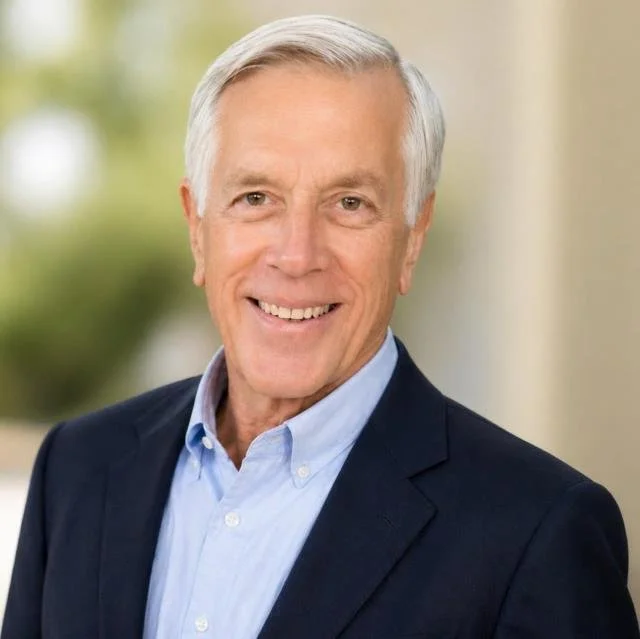
Charles “Charlie” Poore Munroe, beloved husband, father, grandfather, and lifelong resident of Miami, Florida, passed away peacefully, leaving behind a legacy as deeply rooted in Biscayne Bay as the mangroves that line its shores. A native son of Coconut Grove, Charlie was the grandson of Commodore Ralph Munroe — explorer, photographer, and one of the founding fathers of Coconut Grove — and he carried that pioneering spirit with him throughout his 88 years.
Charlie grew up at The Barnacle, his grandfather’s storied waterfront home, where he developed a love for the sea and the outdoors that would define him. His childhood was filled with waterfront adventures — building boats, sailing, cruising the bay, and catching land crabs.
He attended Ransom School for Boys and graduated from Coral Gables High School in 1955. He earned his degree in mechanical engineering from Georgia Tech in 1959, where he was a member of the Sigma Chi fraternity. He served his country as an officer in the United States Navy from 1959 to 1961, then transferred to the Naval Reserve, serving four more years.
After the Navy, Charlie began his career as a mechanical engineer with Eastern Airlines. He later joined IBM, where he found work he loved and built a distinguished career that spanned more than thirty years. At IBM, he was a systems engineer, working on mainframe computers for some of Miami’s most prestigious businesses. Charlie retired at the age of 55 and devoted the years that followed to enjoying life with his wife, Mimi.
Charlie and Mary “Mimi” Johnston had known each other all their lives, as their parents, Wirth and Mary Munroe and Tom and Lorine Johnston, were close friends. The two grew closer over time and began dating in college. They shared 63 happy years of marriage and welcomed four children in five years, followed in time by eight grandchildren.
Charlie was a fixture at the Biscayne Bay Yacht Club, first joining in 1938 as a junior member at the age of one and becoming a senior member in 1959. He served proudly as its Commodore from 1995 to 1997 and remained an active and cherished member of its community for decades.
His love of sailing took him and Mimi cruising with their children through Biscayne Bay, the Florida Keys, and the Bahamas aboard their treasured family sailboat, Comanche — a 40-foot cutter designed by his father, Wirth, which the family still owns. A member of the Cruising Club of America, he spent many years cruising with Mimi to the four corners of the world — Japan, New Zealand, Tonga, Fiji, Turkey, Chile, Colombia, the San Blas Islands, the Baltic Sea, and more. Much of that sailing was done as guests of their good friend Scott Piper aboard his yacht, Pipe Dream, a privilege they never took for granted.
He was a parishioner at the First United Methodist Church of Coral Gables for 50 years, faithfully attending the early chapel service, and a member of Riviera Country Club for 55 years.
Summers brought Charlie and his family to the cool mountains of Balsam, North Carolina, to escape the Miami heat. Their home in Balsam was a place of deep happiness — so much so that, for the past 32 years, they spent half the year there. Charlie devoted himself to sharing the outdoors with Mimi and their children, whether cruising, hiking, camping, or working side by side on projects. He spent many of his vacation days over the years building a cabin in the mountains with his children, creating not only a home but a store of cherished family memories. He moved through the outdoors with a naturalist’s eye, endlessly fascinated by a spectacular sunset, the birds at his feeder, or the flash of a snake in the leaves. His family remembers with great affection — and his wife, Mimi, with terror — his lifelong habit of never passing a snake without stopping to catch it.
Charlie was known for his warmth, kindness, and easy friendliness. A true gentleman and a man of deep integrity, he had a way of making people feel genuinely welcomed. His face would light up when he saw someone he knew, and he delighted in conversation with friends and strangers alike.
A patient and devoted teacher of the natural world, Charlie showed his children and grandchildren how to look, how to wonder, and how to find beauty in the world.
Charlie is survived by his wife, Mary “Mimi” Johnston Munroe; his four children and their spouses: Anne Munroe Crook and Will, Charles Munroe Jr. and Cynthia “Cindy,” Wirth Munroe and Kristen, and Mary Munroe Seabrook and Bruce; and his eight grandchildren: Emily Crook, Davis Crook, Charles “Connor” Munroe, Wirth Munroe Jr., Madison Munroe, Warren Munroe, Margaret “Maggie” Seabrook, and Virginia “Ginger” Seabrook. Charlie is also survived by his brother, William “Bill” Munroe.
A memorial service will be held at the First United Methodist Church of Coral Gables at 4:00 p.m. on July 12, 2026, followed by a reception at the Biscayne Bay Yacht Club.
In lieu of flowers, donations may be made to The Barnacle Society, which preserves the historic home where Charlie grew up, or to Friends of Biscayne Bay, in honor of his lifelong love of the bay.
❦
“I have had a wonderful life, a wonderful wife and wonderful children, of whom I am very proud. They and their families are my legacy to this world.” — Charlie Munroe
UPCOMING EVENTS AT THE BARNACLE
Sawdust and Shavings
by John Palenchar
The ghost of Jim Morrison must have invaded the Barnacle Boathouse over the past month or so as DOORS dominated our boathouse activities. Not only did Mike Chapman complete repairs on the “Jelly Room” door, but John and Mark Monroe re-screened and “climatized” the Library screen door on the main house.
Mike’s project involved disassembling the Jelly Room door and replacing parts of the door which had deteriorated with rot. He then put the door back together, installing five new panels and doweling the stiles and rails back together. A fresh coat of paint and we have a door that may just be good for another 100 years! (The Carriage House and its Jelly Room date back to 1927).
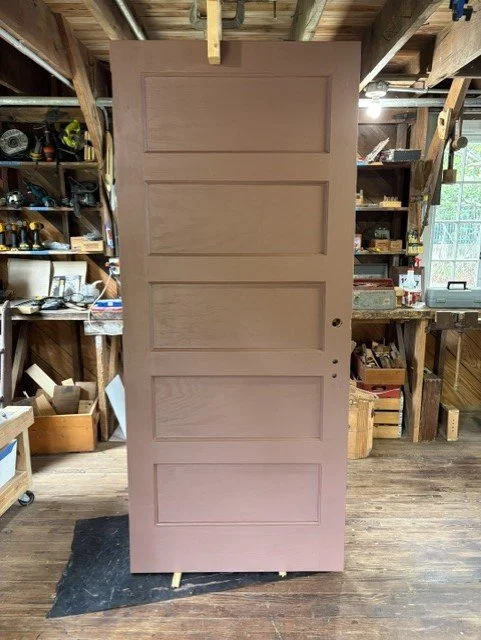
Jelly Room Door Painted and ready for hardware and hanging.
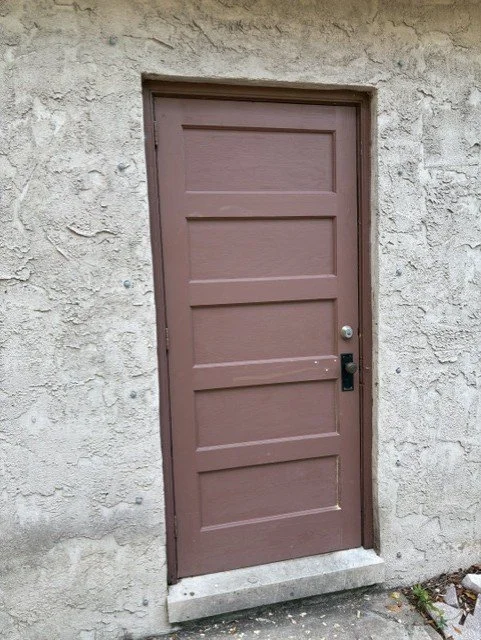
New Door in Service!
The Library Screen Door project arose from Park Staff’s desire to have the Library and its interpretive displays open to the public whenever the Park is open. This will allow folks unable to sign up for the House Tours to get a small but informative glimpse “inside.” As the Library is air-conditioned and the new “open-door” policy requires just the screen door for access (the solid main door will remain open), clear plexiglass was installed behind the screening to seal the Library space from the outside air.
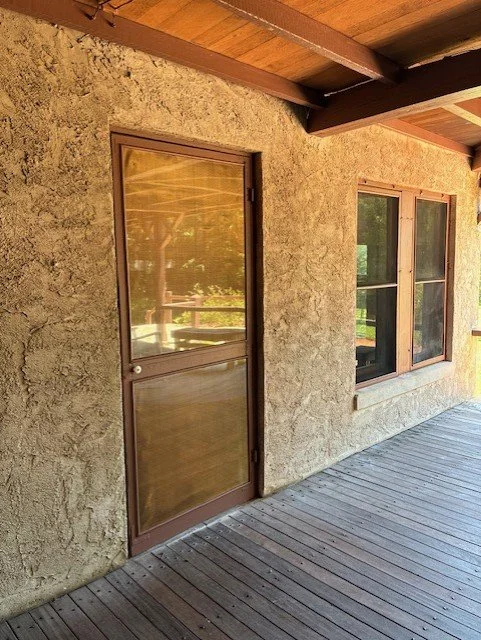
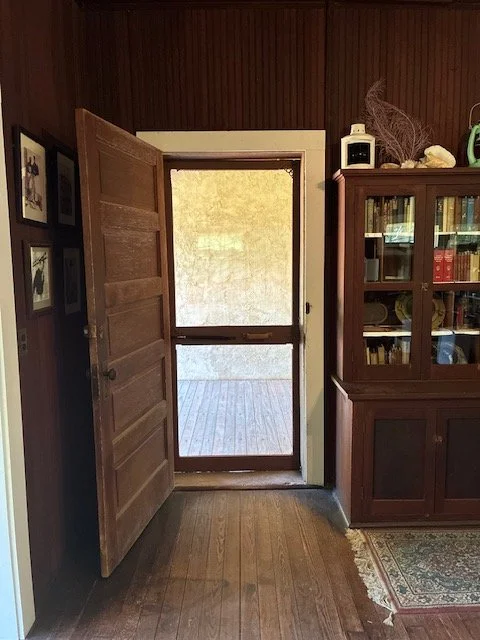
Now that the door projects are complete, it’s on to repairs on our “Cape Cod Oystering Skiff” (The Cape Sable) SPARROW and our dinghy with a rebuild of the Marine Railway on the horizon!
Do you have any woodworking or sailing experience? Any skills with power tools? Reach out to volunteer manager, Kevin Floyd, at Kevin. Floyd@FloridaDEP.gov to learn more about getting involved in our historic boathouse!
A Day in the Life of a Park Ranger
By Ranger Shelby Hoogland
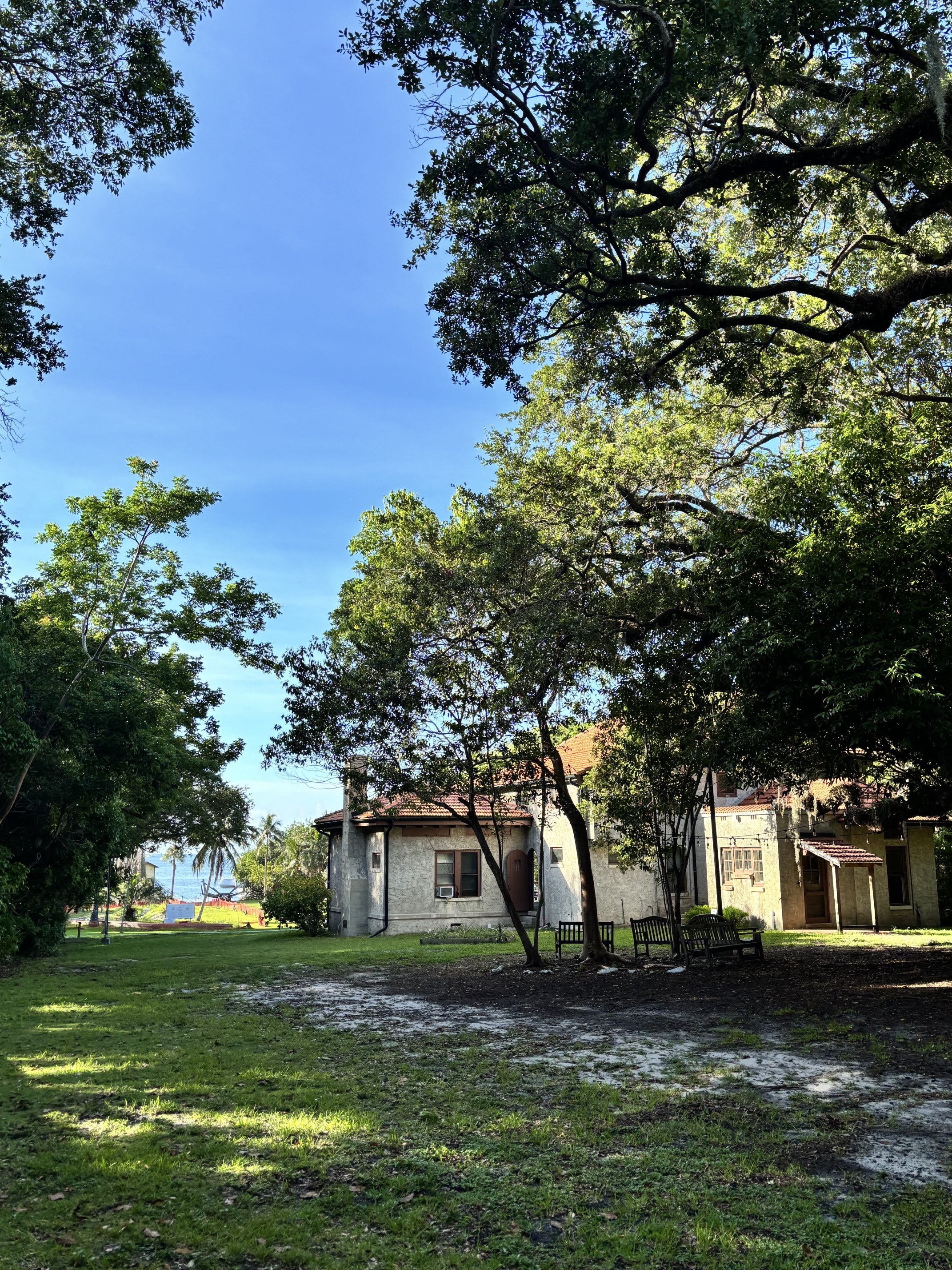
Morning view at The Barnacle from behind the house toward the Bay.
Good morning from (almost) sunny Coconut Grove! I wanted to take you along to experience a day in the life of a park ranger. Granted, while we work hard, we have a pretty luxe job. Just don’t tell the other parks that.
Today is Sunday morning. Current weather is muggy and uncomfortable with a chance of rain later this afternoon. Pulling in at 8 AM, the most important thing to me is first getting my cup of tea situated. I am not a morning person, and my coworkers know that I’m not really awake until after that first cup. I set up our register and clean up the visitor’s center. If you haven’t been inside yet, come on in! I love it when people say hi. The visitor’s center renovation has become my pet project with the support of our museum registrar, Vincent Nastasi, who has rediscovered countless invaluable artifacts.
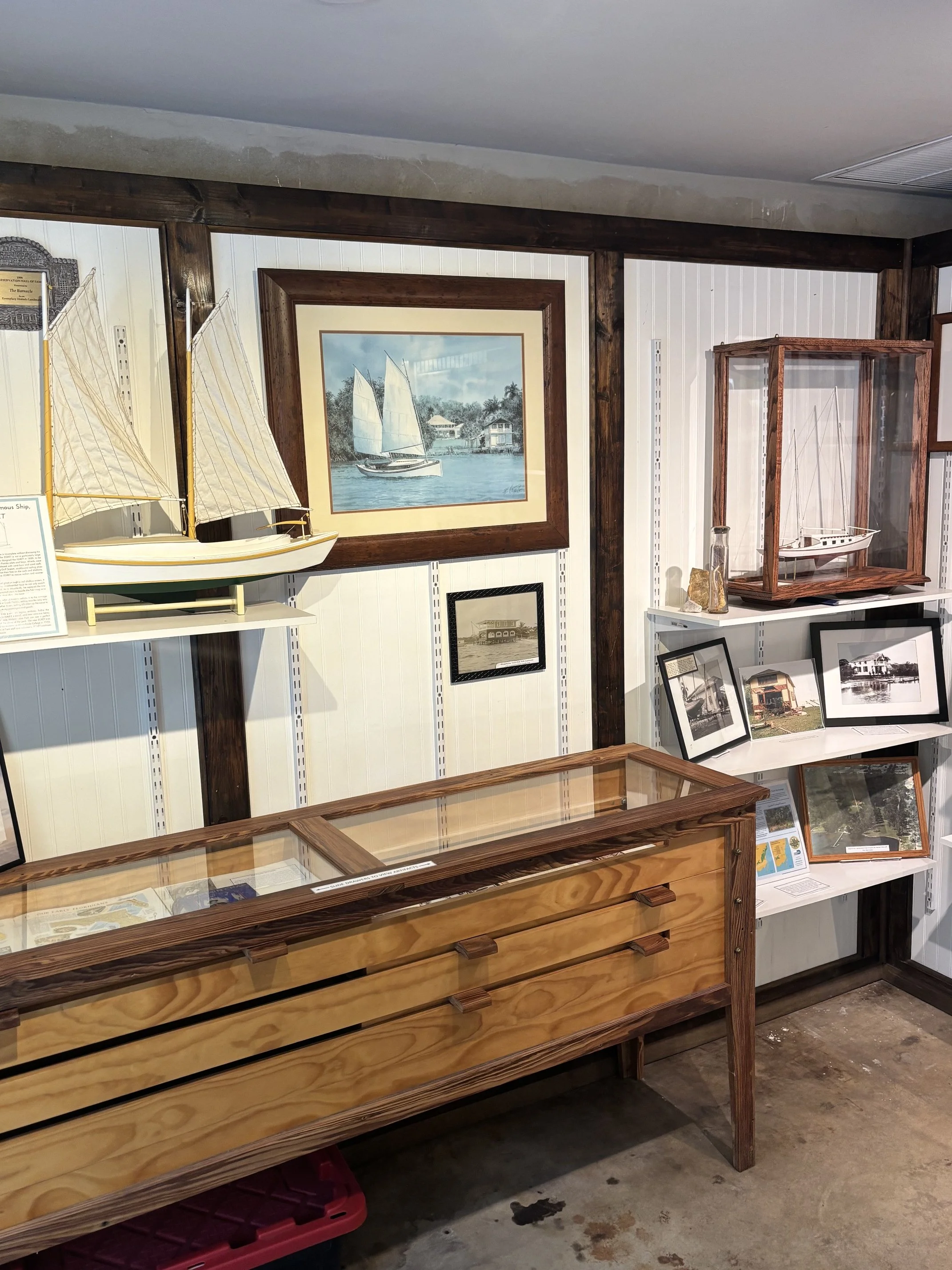
New exhibits in the Carriage House Visitor Center
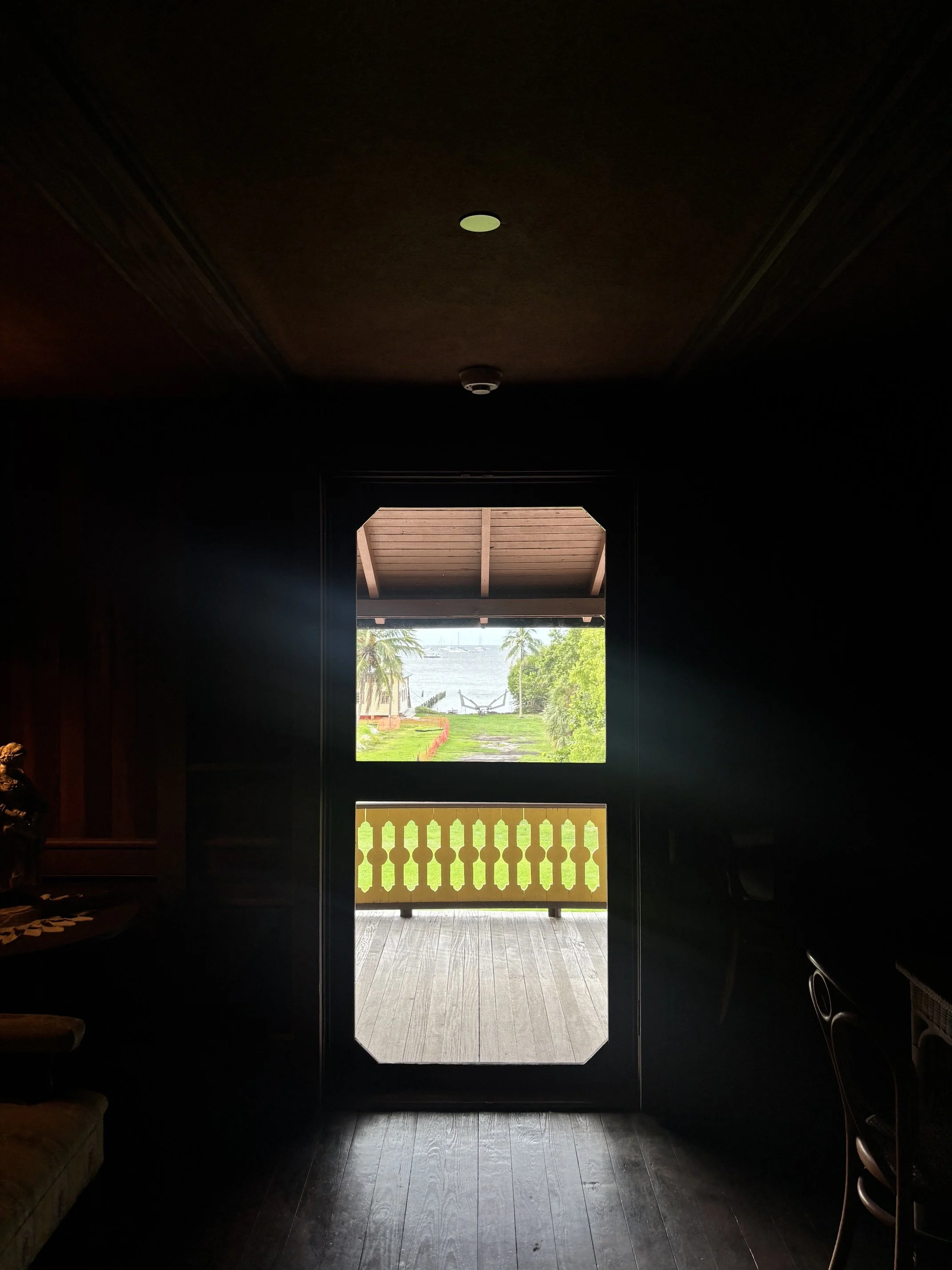
Shelby’s view from the front door!
Next on the to-do list it to open our historical house museum. I always stop and take a moment to appreciate the view from the front door. On days like today, I really must give props to Ralph Munroe for placing the windows specifically to harness that ocean wind to cool down the house.
The park is home to some unique wildlife in these early hours. One morning while I was enjoying that view from the front door, I saw a red fox. Movement caught my attention from the corner of my eye, and as I turned, I thought it was just another neighborhood cat. But then I saw the curled fluff of a tail and as we made eye contact, I knew I was witnessing one of the last remaining residents of the natural environment that came before the Coconut Grove we know today. Another common morning visitor is a yellow-crowned night heron. Marcie Henderson, our administrative assistant, has affectionately nicknamed the bird Henry.
I’m grateful to fellow rangers Albert Carrasquillo and Pol Galigarcia for their willingness to do the hard, dirty projects. On their agenda this morning, is cleaning up our maintenance compound after they demolished our old watershed. Originally, I thought it was named the watershed because it had the unfortunate habit of leaking during heavy rains. However, we all discovered on that day that its name came from a Ralph Munroe-era cistern. Excited research led us to discover that there was a windmill that pumped water from this cistern to the “grotto” – a utilitarian outdoor shower next to the Barnacle house.
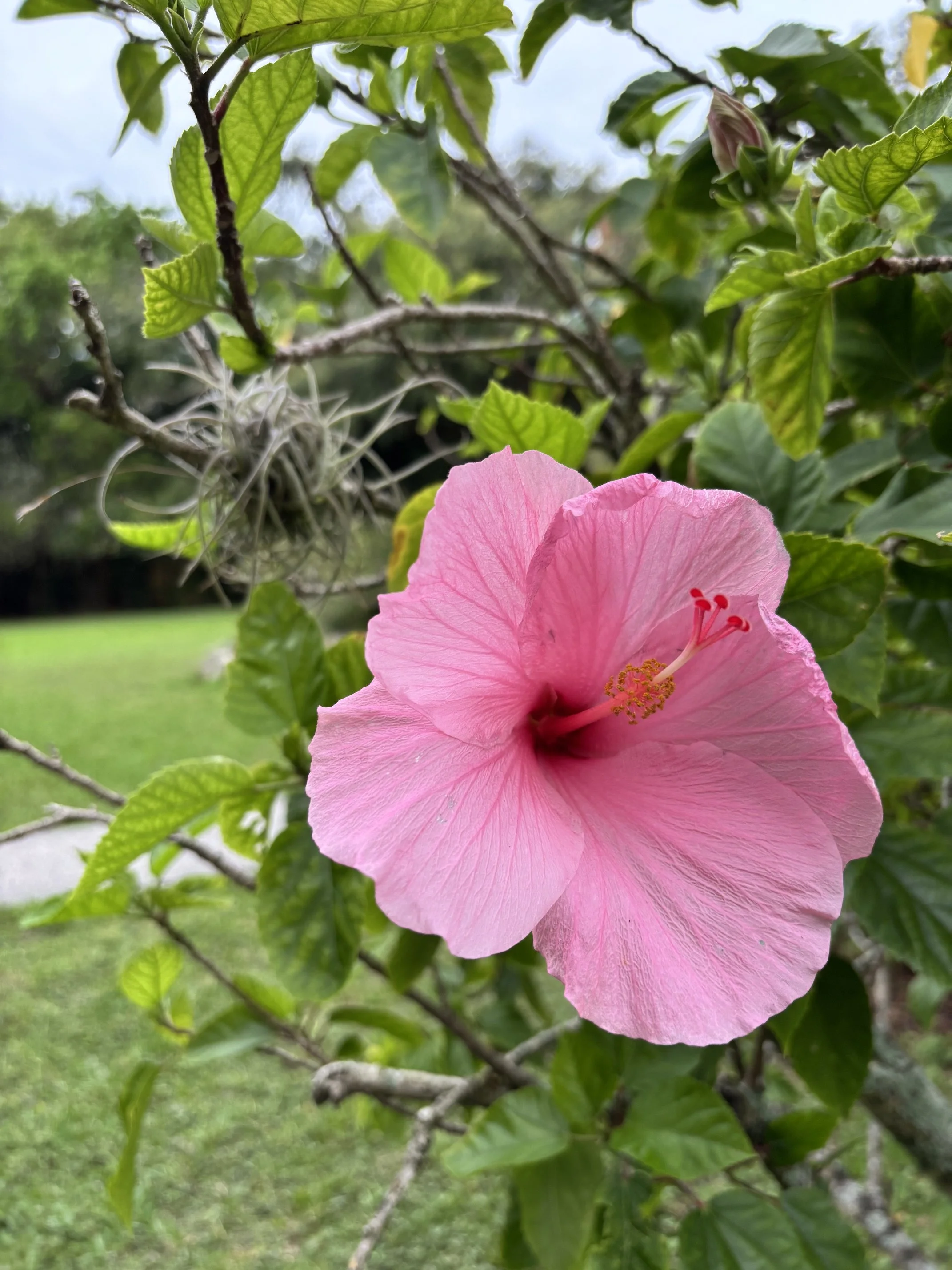
Hibiscus flower next to The Barnacle house.
My favorite part of the day is getting the chance to connect with guests. From meeting people who are also from Alaska and finding out that we have mutual friends, to getting the chance to host an alumni group from my alma mater and finding out that someone’s nephew is a good friend of mine back home.
Normally I would take my lunch outside at a picnic table enjoying our incredible view of Biscayne Bay. However, today’s soggy conditions means taking it inside in our storage room turned break room thanks to the incredible skills of Ranger Gabi Bello. Gabi is like a Swiss army knife embodied as a person. Many things in the park were built (or repaired) by Gabi, including our storage system in the break room.
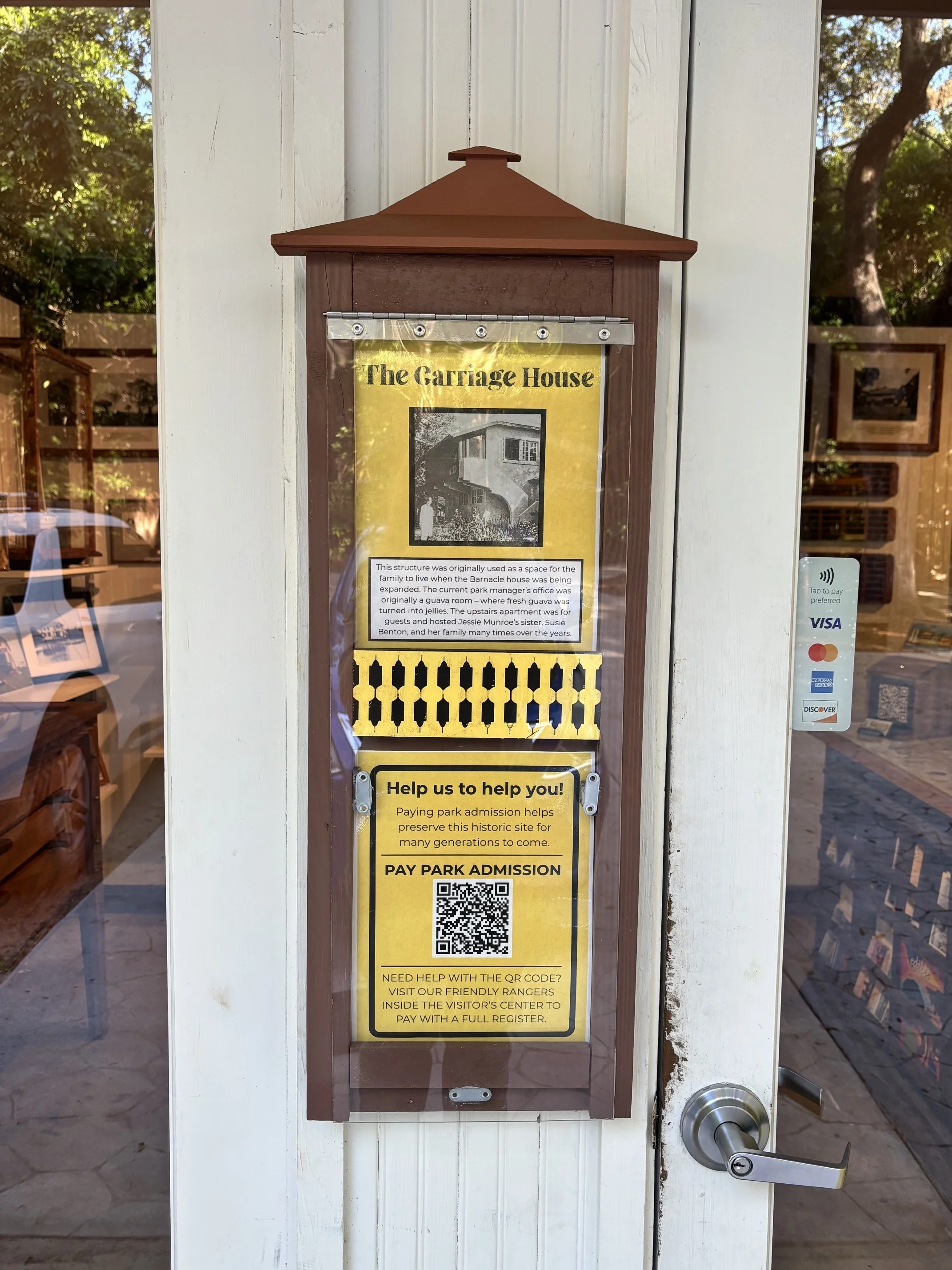
It’s easy to pay your admission using this QR code!
At 5 PM we’re escorting guests out of the park and closing the front gate for the night. The bathrooms are cleaned, the money is counted, and the park is put to bed ready for another full day of welcoming guests and neighbors.
All of this would not run as smoothly – if at all, if it were not for park services specialist Kevin Floyd, park manager Dan Kelsey, and the generous support from our Barnacle Society board. I’m incredibly grateful that my passions and ideas are seen, heard, and encouraged. Although I think if I tell board member and boathouse volunteer extraordinaire, John Palenchar, that I have an idea one more time, he might just retire from the park for good. With recently created new exhibits and new interpretive signs, our park’s collective momentum is only up and I’m excited to see our potential fully pictured. We’re lucky that the Florida Park Service values public lands to such a degree that we have 177 (!!) state parks. If you haven’t visited us in a while, come on by! We would love to host you and your family for a picnic, a tour through our historical house museum, or even just a leisurely stroll after Sunday Brunch.
The nature of things at the Barnacle
by Suzanne Koptur
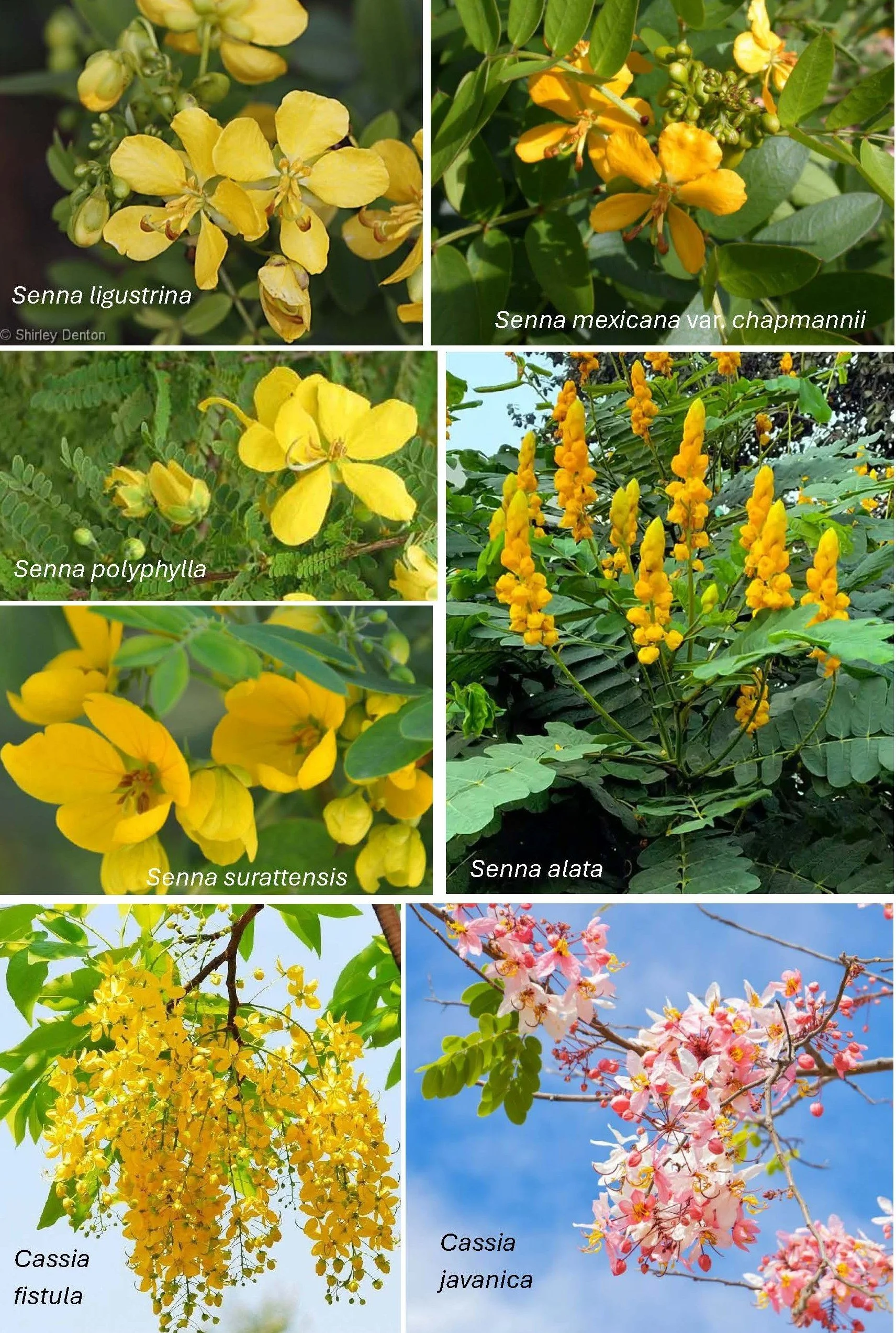
Sulphur butterfly hosplants - two native Senna spp., three non-natives, and Cassia fistula all with yellow flowers; Cassia javanica with pink flowers.
Next time you see a yellow butterfly it may lead you to a lovely understory shrub bearing yellow flowers that is its hostplant: one of a number of Senna species. We have two native Senna species in our area: the Bahama senna (or Chapman’s senna), Senna mexicana var. chapmannii, and the privet senna, Senna ligustrina. There are also some non-native sennas in the urban landscape: the desert Cassia (Senna polyphylla), the golden senna or scrambled egg plant (Senna surattensis), and the candlestick plant (Senna alata). The same butterflies also lay their eggs on two magnificent flowering trees: the golden shower (Cassia fistula) and the pink shower (Cassia javanica).
It seems to me that the cloudless sulphur (Phoebis sennae) and the orange-barred sulphur (Phoebis philea) butterflies are drawn to yellow flowers (and sometimes pink ones). The petals of flowers are even softer than the new leaves of the plants on which the butterflies prefer to lay their eggs, and some of the eggs are deposited on the flowers of the hostplants. When we find caterpillars eating the flowers, they are the color of the petals they are eating – yellow or pink, rather than the typical green color when they eat foliage. But do the adult butterflies turn out to be the color of the flowers? This clever cartoon by Dr. Ian Jones will give you the answer.
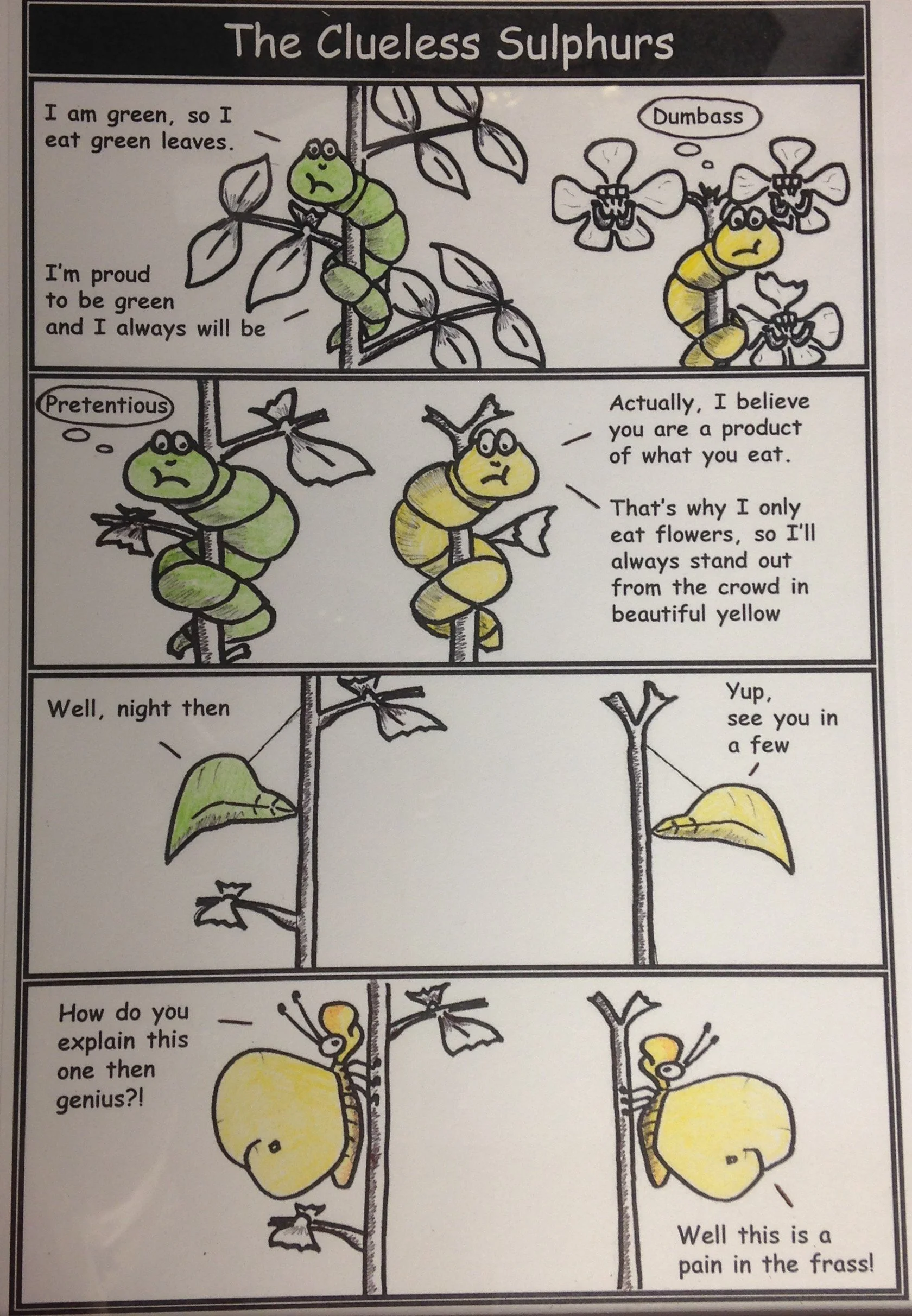
note: The multi-talented Dr. Ian Jones did his dissertation research on Senna mexicana var. chapmanii at Florida International University. He is now a research scientist at the University of Toronto and gave his professor this cartoon when he graduated.
A Spotlight On: The People of the Boathouse
by Inquisitive Ranger Shelby Hoogland
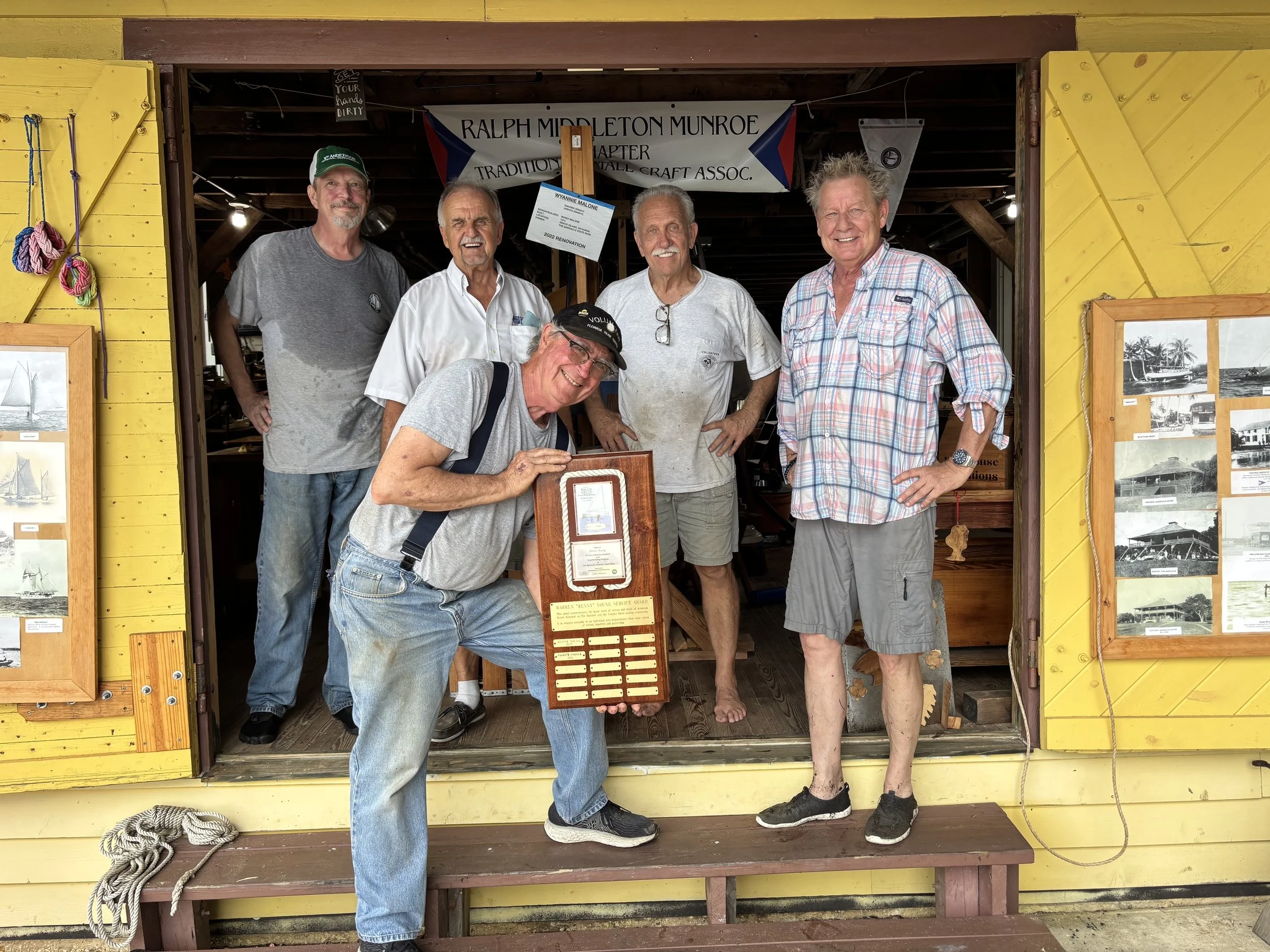
from left: Mark Monroe, Bob Deresz, John Palenchar, Mike Chapman, and Peter Jelonek.
Saturdays at the park are rife with life and activity. The day I visited the boathouse was one of those heavy, humid days that signals the start of summer. At the boathouse today was the volunteer dream team: John Palenchar, Mike Chapman, Bob Deresz, Mark Munroe, and Peter Jelonek. The camaraderie was enough to lift spirits despite the wet weather.
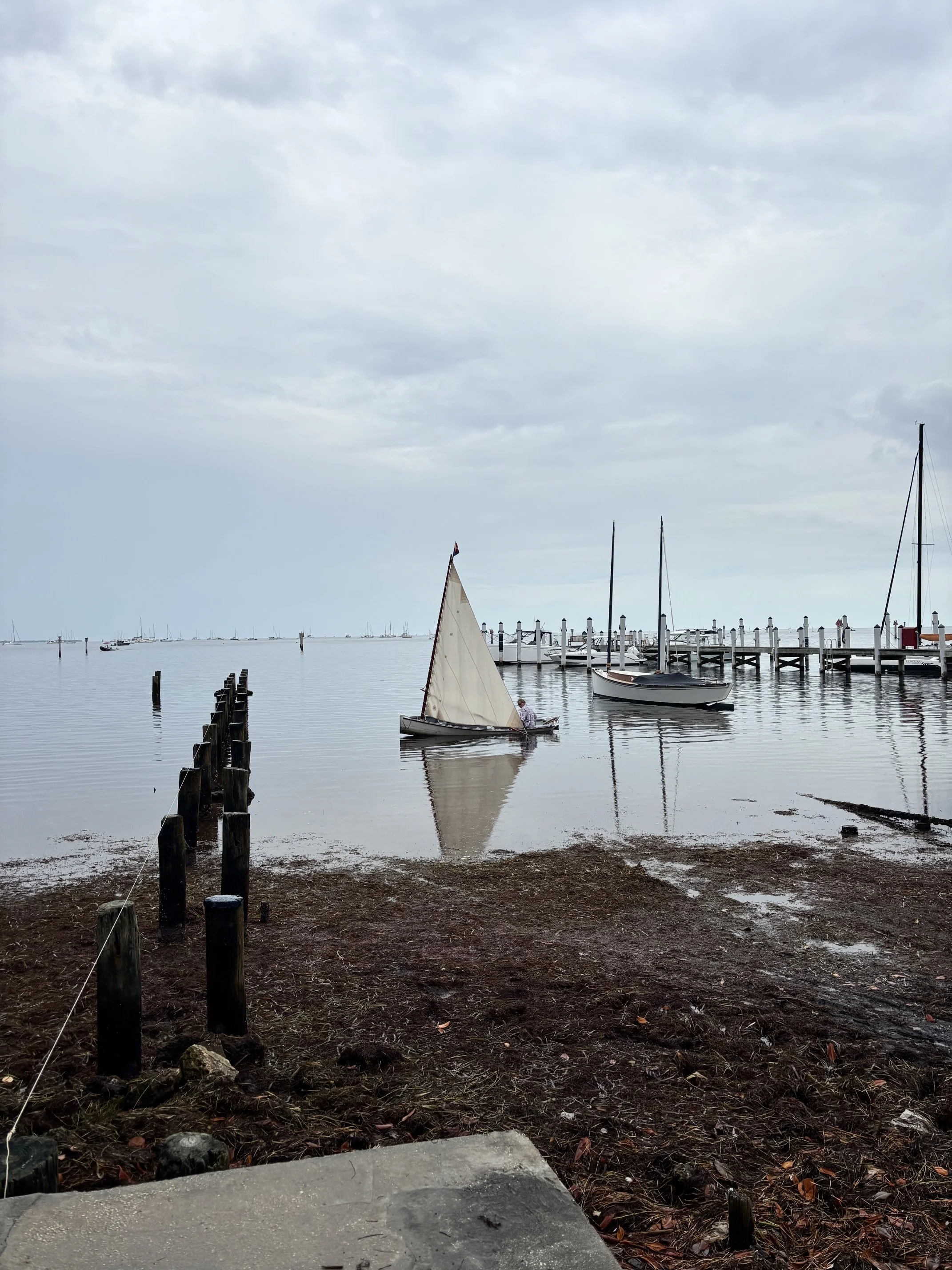
Cape Sable Sparrow with Peter Jelonek on board.
One look at Michael Chapman and you can tell he’s a salty soul. After a stint in the Marine Corps fighting in the Vietnam War, Mike found his calling in shipyards building massive cruise ships. He started volunteering at the Barnacle in 2007, at the urging of his wife when they discovered the park. Mike would simultaneously devote time to the park in addition to working full-time until his retirement in 2018. Despite Mike responding, "Not much," when asked what he does in the boathouse, almost 20 years of service have been filled with many projects. His favorite project has been the Cape Sable Sparrow. Named after the endangered songbird of the Everglades, this boat is a traditional punt, or flatiron skiff, based on lines taken off a Cape Cod oystering skiff by Howard Chapell published in his book American Small Sailing Craft. While he generally is interested in history, boats, and the water, his true passion is in building model boats. You can view many of Mike's creations throughout The Barnacle and even in other museums like Mystic Seaport in Connecticut.
If Mike can be considered the behind-the-scenes person, John Palenchar is what I think of as the face of the Boathouse. This charismatic character found his start in Miami working for the Florida Department of Transportation, first in Maintenance, then Construction, and finally as an Environmental Scientist managing the impact of construction projects on local habitats, including in part helping to design the wildlife underpasses that are integral to the survival of Florida panthers. In 2013, John visited the Barnacle and saw Mike building a skiff. Once John had retired, he devoted his time to serving as a docent at the Kampong and helping with park operations at the Barnacle. Over time, his devotion led him to become a Barnacle Society member and board member for many years. John saw the untapped potential in preserving a historical boathouse. Inspired by the Bevin’s Skiff – originally a project designed to help students learn math — John thought they could build their own skiff here with South Miami High students. It was a passion project with the help of Warren “Renny” Young. Renny was a longtime volunteer who devoted much of his time to furthering the sailing community in Coconut Grove.
One reason for the decline in wooden boats is the ease of maintaining fiberglass vessels, John believes. Some may say that “maintaining a wooden vessel is like taking a handful of money and tossing it in the ocean”. But it’s more than that. Furthering the wooden boat industry, niche as it is, is the preservation of the simpler life, something that Ralph Munroe himself talked endlessly about during the rise of gas motors.
Mark Monroe has been a recent but steady face in the boathouse. He describes his role as a support person. After moving from San Francisco to Miami many years ago, Mark met John Palenchar through the wonderful women in their lives. Fast forward to about two years ago; Mark had retired and was looking for ways to fill his sudden free time in addition to his volunteer work watching eagle nests and rehab-ing gopher tortoises. Mark enjoys volunteering in the boathouse just for the pure activity of it. He said he has neither an affinity for boats nor sailing nor woodworking. Growing up in a historical home in San Francisco, Mark saw his father making many repairs, leading him to appreciate being hands-on with his time…Time well spent in the boathouse!
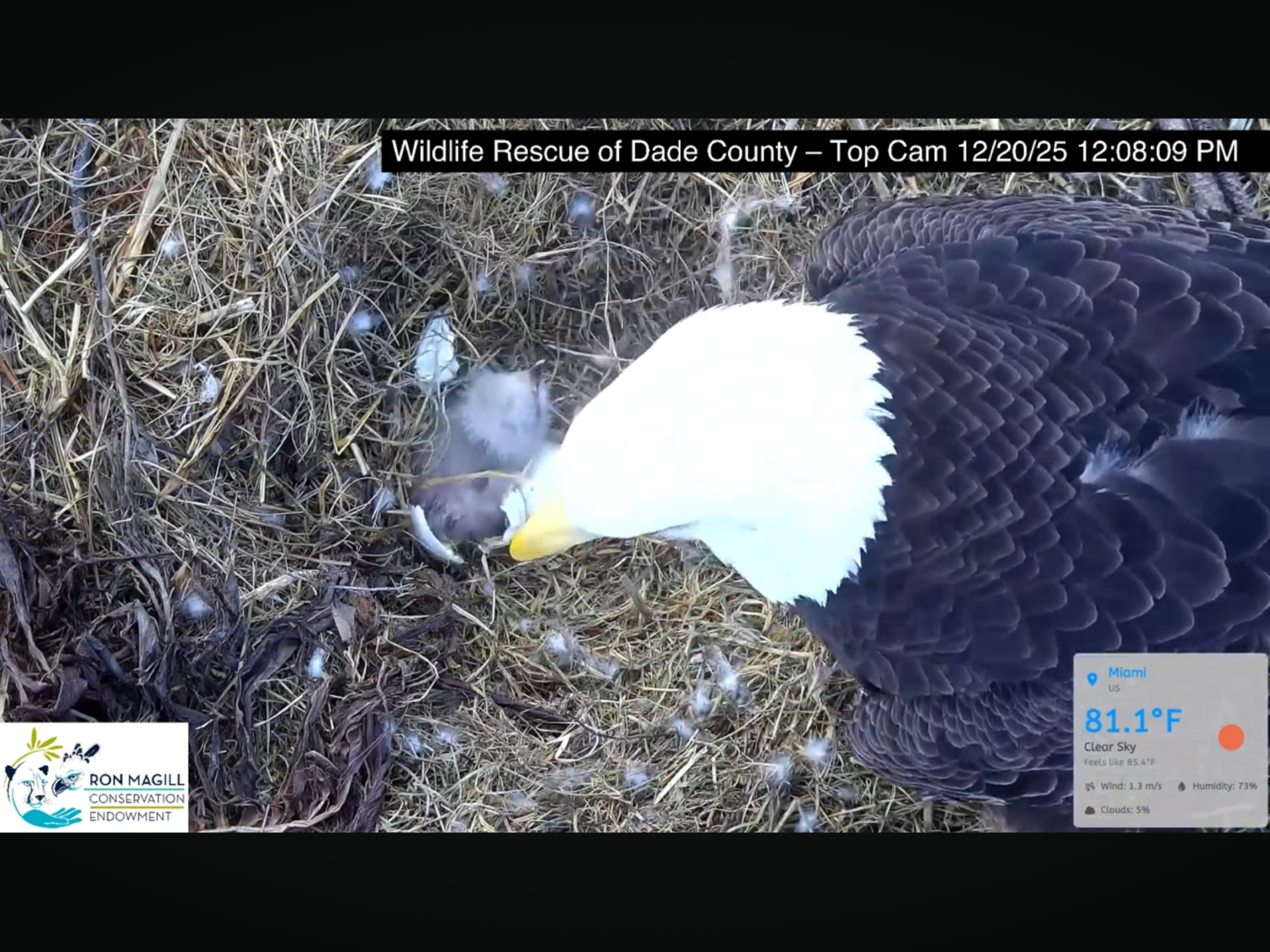
Bald eagle chick hatches under Mark’s watchful eye
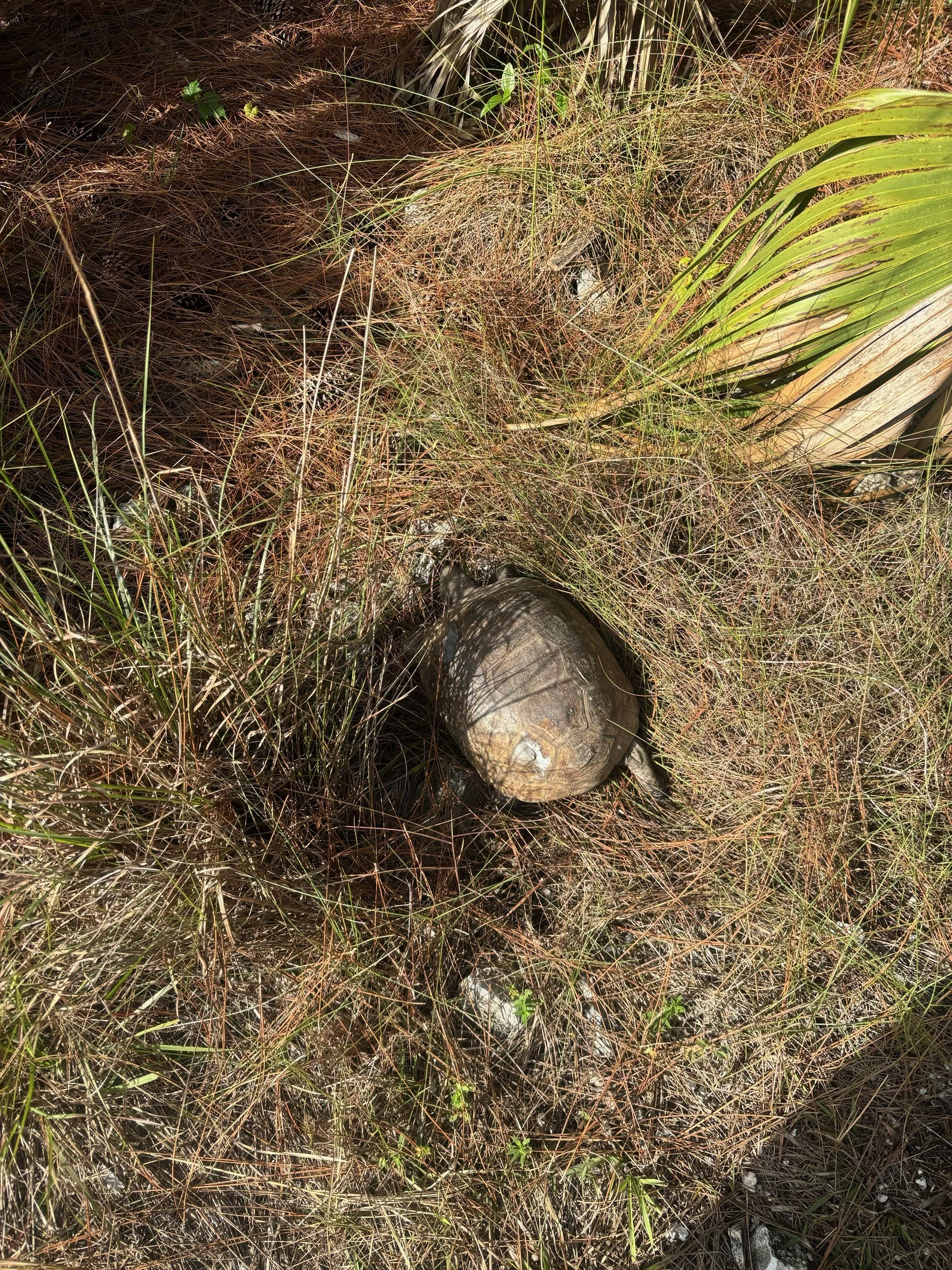
A gopher tortoise finds a new home!
Bob Deresz might be one of the Barnacle’s longest-running volunteers. Originally from Detroit, he and his brother spent their boyhoods sailing with the Detroit Yacht Club. In 1970, just before moving to Miami, Bob would work the waterfront of Camp Michigania. His move to Miami that fall eventually brought him to Coconut Grove and the Barnacle. He first volunteered at the Barnacle portraying Santa during a Moonlight Concert in 2002 and has been here ever since. Bob is well-known (notorious?) throughout the Grove and is a member of other community partners like the Coconut Grove Sailing Club and the Women’s Club of Coconut Grove.
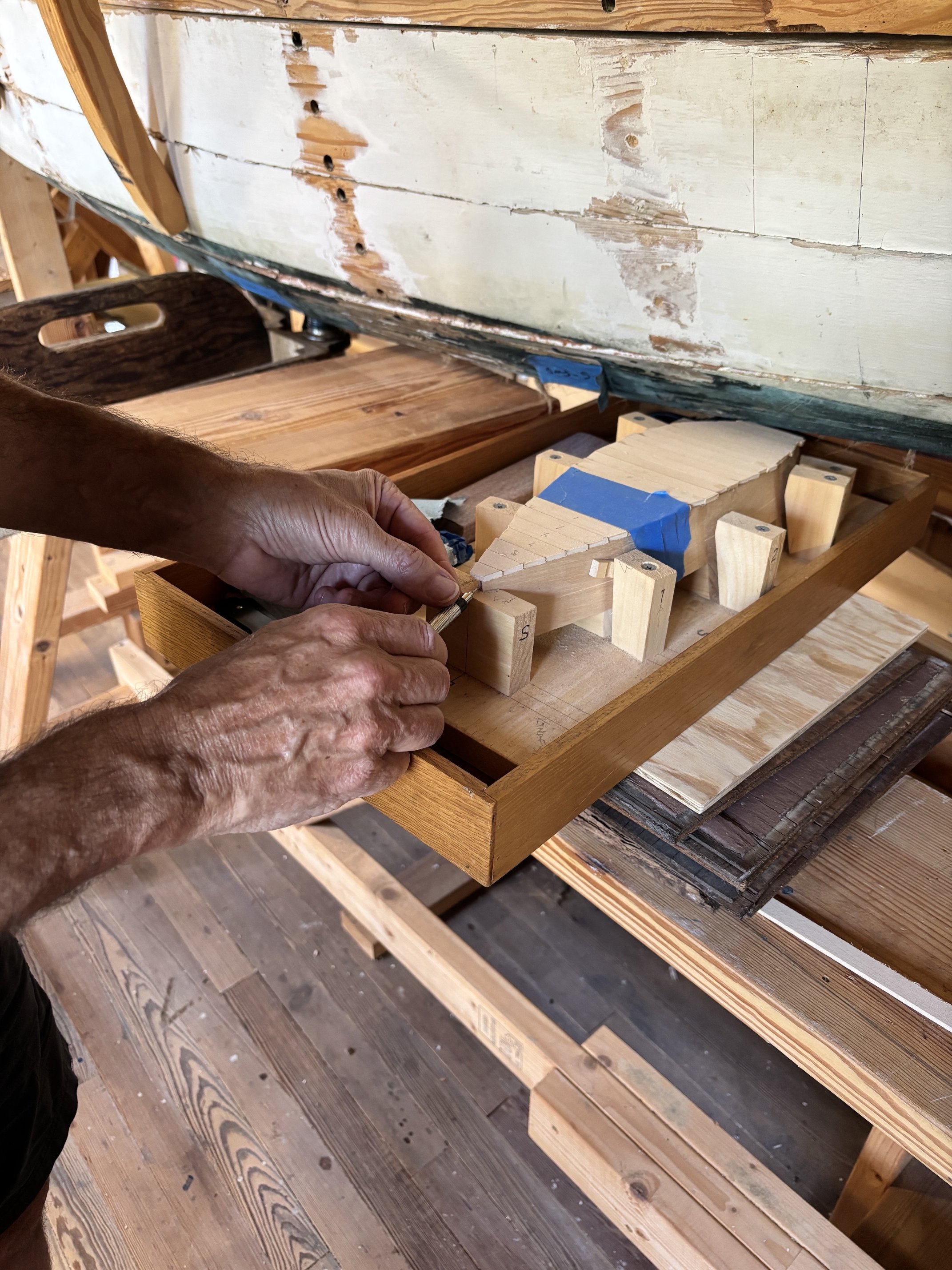
Hands of Danny Garcia, building model flatiron skiff.
I would be remiss to finish this spotlight on the people of the boathouse without mentioning Danny Garcia and Wendy Mahr. Danny and Wendy are both Miami natives through and through. Danny moved here from Cuba at one year old, and Wendy is a second-generation Miamian. From their training in graphic design and marketing, they’re responsible for many things we see today throughout the park. They first got involved at The Barnacle after competing in the Washington’s Birthday Regatta in 2008. During the post-Regatta Chowder Fest, they met John Palenchar and hit it off. Danny prefers to be behind the scenes, and Wendy isn’t just a great person to talk to; she’s also gotten down and dirty in the boathouse when a skiff needed to be repainted. Being quite the artist, she has also created multiple awards for the Washington’s Birthday Regatta. They have been in just about every regatta since 2008 and have also donated much of their time on the race committee. Many signs and promotional materials, including the shirts we all love, have been products of this smart couple.
Most recently, Danny has been the test subject for building the models of the flatiron skiffs. A pet project of Mike’s is introducing new boathouse volunteers to the world of woodworking through low-stakes model building. This helps the volunteers learn the tools, the lingo, and the rhythm. They appreciate the structure and the projects for their historical value. Danny says being inside the boathouse is like being “in another time.” The people of the boathouse, including John and Mike, create a great environment in which to learn.
There are so many other people that can be mentioned in this article and thanked for their countless time devoted to furthering the conservation of historical boat building. Some of these people include Bill Tenney – former Egret captain and longtime friend of the Munroes and Alyn Pruett, Warren "Renny" Young, Gabi Bello, and John Van Leer, just to name a few. But in today’s version of the boathouse crew, we keep coming back to John Palenchar. Many of the longtime volunteers we have are due in part to John. He is one of the tireless captains that keeps this ship sailing forward. The comradery experienced here is something the Commodore really would have loved. People coming together, pushing the box of what’s possible, and furthering the movement for simplicity in life are all things that can be experienced in the boathouse.
Renew your membership
The support of our community helps ensure the future of The Barnacle. Your membership makes a huge impact in the maintenance of the museum, the grounds, and all the amazing projects in the Boathouse. Please take a moment to renew your membership, or to become a member if you have not done so already. Thank you for supporting The Barnacle!
ABOUT THIS NEWSLETTER
The News Packet was created to inform members and public about The Barnacle Society, The Barnacle Historic State Park, and events and activities there. Published quarterly by The Barnacle Society, it is part of our continuing program to support and preserve the home of Commodore Ralph Middleton Munroe. The News Packet represents the method of mail and news delivery before the turn of the 20th century. A small boat sailed to Fowey Rocks Light and received a “packet” of newspapers and mail from passing coastal ships bound for Key West or Jacksonville.
Suzanne Koptur, Editor
Gabi Bello, Webmaster
BOARD MEMBERS
Officers
Mary Scott Russell, President
Sweet Pea Ellman, 1st VP
Kevin Black, 2nd VP
Graham Coords, 3rd VP
Rafael Felippe, Treasurer
Debra Wellins, Recording Secretary
John Palenchar, Corresponding Secretary
Directors
Peter Berman, Ashley Castillo, Bryn Ingram, Olivier de Lavalette, Wirth Munroe, Doug Reno, Marc Stone, Pam Shlachtman, Walt Walkington
MISSION STATEMENT
The Barnacle Society, Inc. is a volunteer non-profit, citizen-supported organization created to generate public awareness, education, and financial support for the preservation and maintenance of The Barnacle Historic State Park.
PARK HOURS
Thursday through Monday 9 AM to 5 PM Closed Tuesdays and Wednesdays, New Year's Day, Thanksgiving, and Christmas.